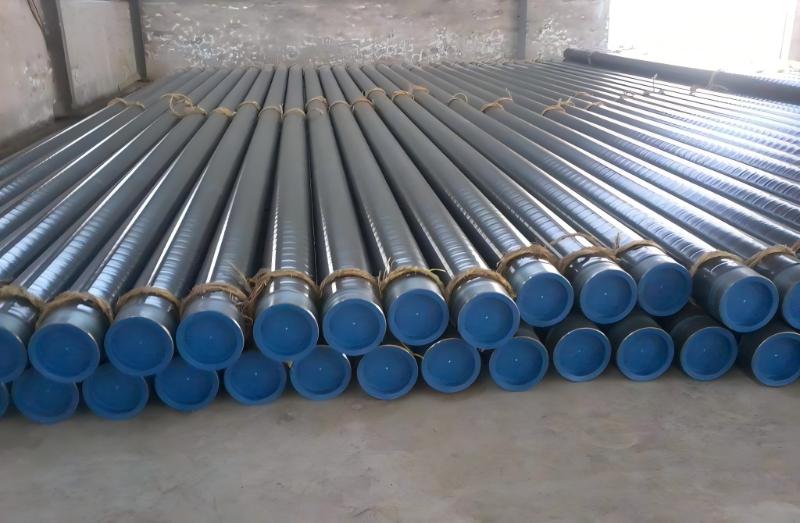
1. Main Anti-Corrosion Coating Types for Line Pipes
1.1 3PE Coating (Three-Layer Polyethylene, Most Popular)
Structure: Fusion bonded epoxy primer (FBE) + adhesive copolymer layer + high-density polyethylene outer layer.
- Advantages: Excellent resistance to soil corrosion, water penetration, mechanical impact and cathodic disbondment; long service life over 50 years underground.
- Disadvantages: Unsuitable for high-temperature media above 60°C; prone to aging under long-term intense sunlight exposure.
1.2 2PE Coating (Two-Layer Polyethylene)
Structure: Adhesive layer + HDPE outer layer, no epoxy primer.
- Advantages: Low cost, good flexibility for small-diameter pipes.
- Disadvantages: Poor anti-cathodic disbondment performance, only for low-demand buried water pipelines.
1.3 Single-Layer FBE (Fusion Bonded Epoxy)
Structure: Single epoxy powder coating bonded to steel surface at high temperature.
- Advantages: High heat resistance (max operating temp up to 110°C), strong adhesion, thin uniform coating, ideal for above-ground high-temperature steam pipelines.
- Disadvantages: Weak anti-impact ability, easy to scratch during construction.
1.4 2FBE Double-Layer Epoxy Coating
Dual-layer epoxy powder system, thicker protective film than single FBE. Better wear resistance for rocky soil backfill conditions.
1.5 Coal Tar Enamel (CTE)
Traditional anti-corrosion coating with coal tar pitch and glass fiber wrapping.
- Advantages: Ultra-low permeability, low cost.
- Disadvantages: Toxic, environmental restrictions in most developed regions, gradually phased out.
1.6 Cement Mortar Lining (Internal Anti-Corrosion for Water Pipes)
Inner wall cement mortar coating, used to prevent inner rust of drinking water and sewage pipelines, stabilize water quality.
1.7 PU Polyurethane Coating
High-performance rigid polyurethane coating for offshore, marine and high-salinity soil environments, superior salt corrosion resistance.
2. Base Pipe Substrates for Anti-Corrosion Line Pipes
Anti-corrosion coatings are applied on standard steel pipe substrates as below:
- Seamless pipes: ASTM A106, API 5L seamless line pipe for small & medium high-pressure transmission.
- ERW Electric Resistance Welded pipes: API 5L Grade B/X42/X52 for medium-diameter urban gas & water pipelines.
- LSAW Longitudinal Submerged Arc Welded pipes: Large OD heavy-wall pipes for long-distance crude oil trunk lines.
- SSAW Spiral Submerged Arc Welded pipes: Low-cost large-diameter pipes for municipal water, heating and low-pressure gas transmission.
3. Complete Dimensional Specification Range
3.1 Outer Diameter (OD)
- Small size: DN50 – DN200 (2” – 8”) seamless / ERW pipes
- Medium size: DN250 – DN800 (10” – 32”) LSAW / SSAW pipes
- Large trunk line size: DN900 – DN2000 (36” – 80”) spiral & longitudinal welded pipes
3.2 Wall Thickness
Range from 3.0 mm to 30 mm, matched with design pressure grades (PN10, PN16, PN25, PN40 and API X-grade pressure ratings).
3.3 Standard Length
Fixed lengths: 6m, 12m; customized random lengths for project requirements.
3.4 Coating Thickness Standards
- 3PE coating: ≥2.0 mm total thickness for underground trunk lines
- Single FBE: 300–600 μm film thickness
- Cement mortar lining: 6–12 mm inner coating thickness based on pipe diameter
4. Core Technical Performance Indicators
4.1 Mechanical Properties of Coating
- Impact resistance: 3PE coating withstands ≥10 J impact energy to avoid damage during transportation and backfilling.
- Peel strength: Strong bonding force between coating and steel substrate to prevent peeling under soil stress.
- Flexibility: No coating cracking after pipe cold bending within standard bending radius.
- Hardness & abrasion resistance: Resists friction damage from rocky soil.
4.2 Anti-Corrosion Chemical Performance
- Low water absorption rate: Blocks underground groundwater penetration to isolate steel from corrosive soil ions (chloride, sulfate).
- Cathodic disbondment resistance: Prevents coating detachment under cathodic protection voltage of buried pipelines.
- Acid & alkali resistance: Stable in neutral, weak acid and weak alkaline soil environments.
- Salt spray resistance: PU and FBE coatings pass thousands of hours salt spray testing for coastal high-salinity projects.
4.3 Environmental & Service Performance
- Operating temperature range:
- 3PE: -30°C ~ +60°C
- FBE: -30°C ~ +110°C
- PU coating: -40°C ~ +80°C
- Service life: Standard 3PE buried pipes guarantee over 50 years maintenance-free service.
- Weather resistance: FBE and PU coatings support above-ground installation; 3PE must avoid long-term direct sunlight.
5. Wide Industrial Application Scenarios
- Long-distance oil & gas trunk transmission lines
API 5L 3PE anti-corrosion LSAW/SSAW pipes for cross-country crude oil, natural gas and liquefied petroleum gas transportation. - Municipal urban pipeline networks
Buried 3PE ERW pipes for city natural gas distribution, heating steam pipelines and drinking water supply mains. - Sewage & wastewater transportation
Cement mortar internal lined anti-corrosion spiral steel pipes for urban sewage and industrial wastewater discharge. - Offshore & coastal engineering
PU double-layer anti-corrosion pipes for offshore platform water injection pipelines, coastal seawater intake & discharge lines with high chloride content. - Chemical plant process buried piping
FBE coated seamless pipes for underground transmission of medium-temperature chemical media with weak corrosivity. - Thermal power station buried cooling water & heat supply pipelines
High-temperature resistant FBE coated seamless pipes for underground boiler circulating water and heat delivery networks.
6. Summary Paragraph
Anti-corrosion line pipes combine carbon steel pipe substrates with different protective coatings including 3PE, FBE, 2PE, PU and cement mortar lining, covering a full range of diameters and wall thicknesses to match various pressure and temperature working conditions. Each coating type features distinct mechanical strength, temperature tolerance and anti-corrosion performance targeting different soil, medium and installation environments. With excellent water isolation, chemical resistance and mechanical protection, these coated steel pipes effectively stop rust and electrochemical corrosion underground or above ground. They serve as the core transmission infrastructure for long-distance oil & gas trunk lines, municipal gas, water and heating networks, coastal marine projects and chemical industrial buried piping systems, delivering long-term stable and low-maintenance service for fluid transportation